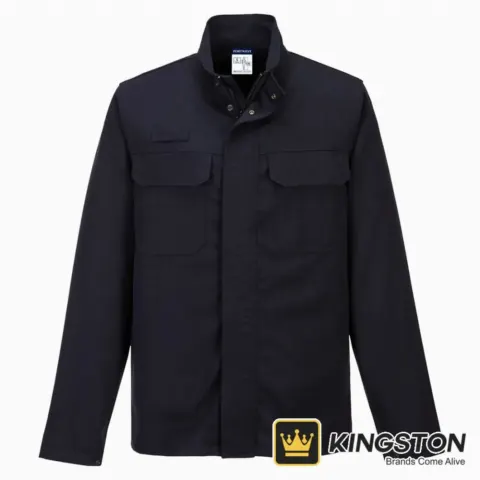
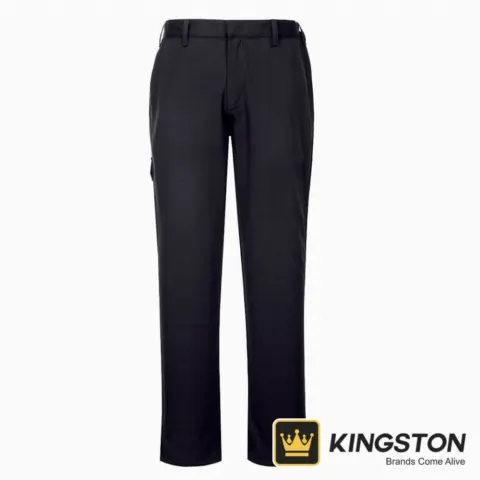
This guide explains the main standards and how to choose. Your risk assessment always decides what is needed.
Who usually needs FR clothing
FR workwear is common in welding and fabrication, foundries, offshore and onshore energy sites, refineries, chemical plants, and some electrical and utility work. Some sites require it for everyone, even visitors, while others only for specific tasks.
Never assume. Check your site rules or risk assessment. Where FR is required, the employer must provide it under the PPE at Work Regulations.
EN ISO 11612: heat and flame
EN ISO 11612 covers clothing that protects against heat and flame. Every garment must pass a limited flame spread test, code A1 or A2, plus at least one heat test. The codes on the label show what it was tested for, and a higher number means better protection.
- A: limited flame spread
- B: convective heat
- C: radiant heat
- D: molten aluminium splash
- E: molten iron splash
- F: contact heat
EN ISO 11611: welding
EN ISO 11611 is for welding and allied processes. Class 1 is for less hazardous welding with lighter spatter and radiant heat, such as TIG and gas welding. Class 2 is for more hazardous work with heavier spatter, such as MMA with basic or cellulose electrodes, or high-current MIG. The class should match the processes your welders actually use.
Arc flash and antistatic
Electrical workers at risk of arc flash need clothing tested to IEC 61482. Where static could ignite gas, vapour or dust, garments may need to be antistatic to EN 1149. Many FR garments are multi-norm, meeting several standards at once. These are specialist decisions, so take advice from your safety lead.
Keeping FR garments working
FR performance can be lost through damage, contamination with oil or grease, or wrong washing. Follow the care label exactly. Do not wear ordinary polyester base layers under FR garments where they could melt. Replace garments that are torn, worn thin or heavily soiled with flammable substances.
Where to put your logo
Branding FR garments must not reduce their protection. Ordinary embroidery thread and print inks can melt or burn, which defeats the purpose of the garment. Any logo on FR clothing should use materials suitable for the garment, kept small, and not placed over reflective tape on FR hi-vis. Talk through your logo before ordering so the method suits the garment's certification, and check the proof carefully before anything is made.
Ordering what this guide covers
The garments this guide talks about, such as flame resistant clothing, coveralls and PPE and safety gloves, can all be ordered from one piece with free logo setup. The logo price drops at 9 and again at 25 garments, and every garment with a small logo counts towards it, whatever the style or colour. Before anything is made, we embroider an actual sample of your logo and email you a photo to approve, or you can pop in to our Hull workshop to see it.