The kit has to carry the tools, shed sawdust, protect knees and feet, and look tidy enough for fitting a customer's new kitchen doors. It should also be safe to wear around workshop saws and planers.
First fix versus second fix
First fix is structural: floor joists, stud walls, roofs. It is outdoors or in open shells, so it needs tough trousers, safety boots and weather layers. Second fix is finishing: doors, skirting, architrave, stairs. It is indoors, often in clean homes, so lighter footwear and a tidier top suit it better.
Many joiners keep a set of each and change by job.
Carrying the tools
A joiner's trousers carry a pencil, tape, knife, square and a handful of screws or nails. Holster pockets that can be tucked away when not needed are ideal. A tape measure clip and a ruler pocket on the leg save time. Kneepad pockets help when laying floors and fitting skirting. Look for reinforced pocket bases, because sharp pencils and knives wear through quickly.
Sawdust and machines
Fine dust from saws, routers and sanders gets everywhere and some wood dust is hazardous. Dust extraction and respiratory protection come first. Clothing helps: smooth, tightly woven fabrics shed dust better than fleece. In the workshop, avoid loose sleeves, drawcords and dangling cuffs near rotating machinery. Safety glasses are essential at the saw. Brush or vacuum clothes down before getting in the van, rather than blowing them off.
Feet and hands
Dropped timber, doors and power tools make toe protection sensible on site, and a penetration-resistant midsole guards against nails in offcuts. Choose safety footwear to EN ISO 20345 that matches the site rules. Gloves suit handling rough timber, but are not worn near rotating saw blades. For second fix in finished homes, a lighter safety shoe is less likely to mark new floors, and overshoes keep carpets clean.
Where to put your logo
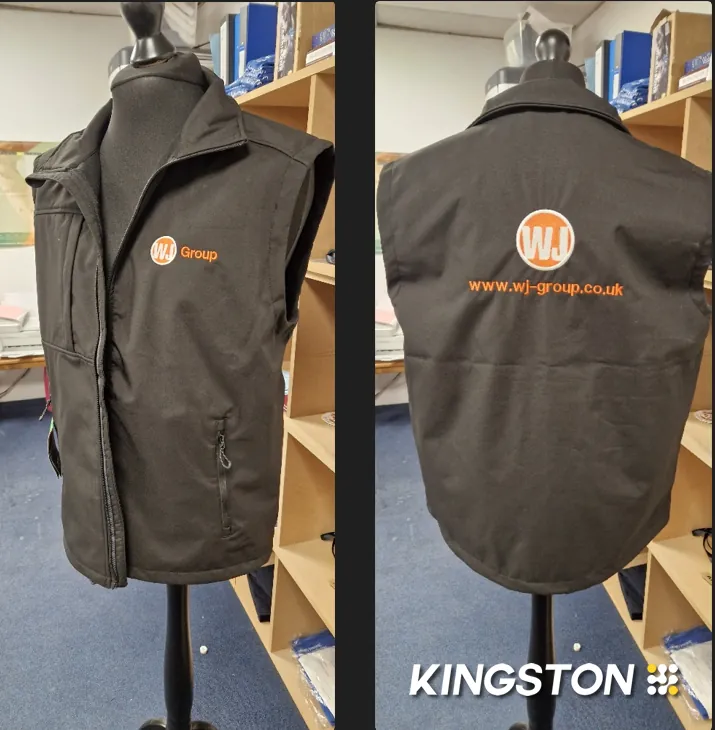
Embroidery is the usual choice for joiners: a left chest logo on polos, sweatshirts and gilets lasts through dusty, hard wear and looks like a proper business. Sawdust can be brushed off embroidery easily. Print the company name and phone number on the back of T-shirts for first fix and site work. For bespoke joinery workshops that meet clients, a smarter embroidered softshell or quarter zip is worth having.
Ordering for joiners and carpenters
Most joiners and carpenters start with holster pocket trousers, workwear polo shirts and crew neck sweatshirts. You can order from one garment and add more as you take people on. The logo price drops at 9 and again at 25 garments, and every garment with a small logo counts towards it, so mixing styles and colours still gets the better price. Before anything is made, we embroider an actual sample of your logo and email you a photo to approve, or you can pop in to our Hull workshop to see it.