This guide covers the main garments and what to look for in each.
Why chef jackets look the way they do
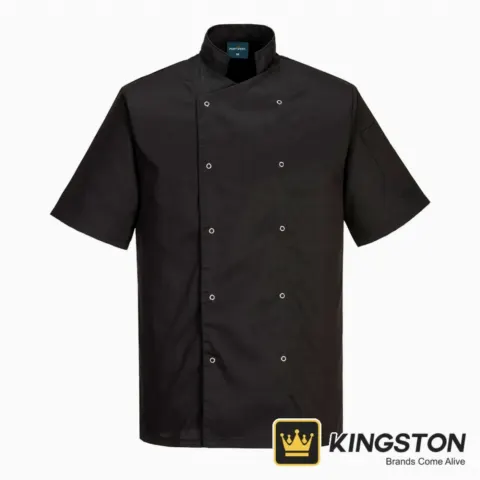
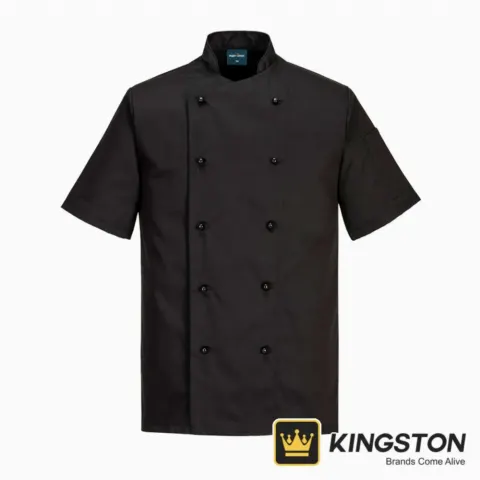
The traditional double-breasted front gives two layers of fabric over the chest, a barrier against splashes and heat. It can also be swapped over to hide a stain before service. Long sleeves cover the arms near hot pans and steam.
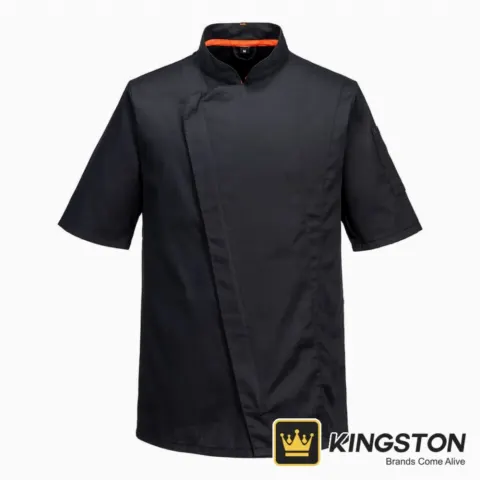
Short-sleeve styles are popular in hot kitchens and for prep work, but check your own kitchen's rules and risk assessment before switching.
Fabric and fit
Polycotton is the common choice. It washes hot, dries quickly and holds its shape. Pure cotton feels cooler but creases more. Look for vented backs or mesh panels in very hot kitchens.
Fit matters for safety too. Loose cuffs can catch handles. A jacket that is too tight restricts movement during a busy service. Women's fit jackets are widely available and fit better than a smaller men's size.
Colour: whites, blacks and the rest
White shows dirt, which is partly the point: it signals a clean kitchen and can be washed hot. Black and grey jackets hide stains and suit open kitchens and street food. Many teams use colour to separate roles, such as white for chefs and black for front of house, or a coloured trim for the head chef.
The rest of the kitchen uniform
A full kitchen outfit is more than a jacket.
- Chef trousers: elasticated or drawstring waist, often check or black
- Aprons: bib or waist, to take the worst of the mess
- Headwear: skull caps, hats or zandanas to keep hair contained
- Footwear: closed, slip-resistant shoes. Look for SR on safety footwear
Food safety and hygiene
Kitchen clothing helps protect food as well as staff. Many kitchens avoid external pockets above the waist so items cannot fall into food, and press studs instead of buttons. Your food safety management system and environmental health officer are the best guide to what your kitchen needs.
Where to put your logo
Embroidery is the natural choice for chef jackets. It survives hot washing and looks right on heavier polycotton. The usual position is the left chest, with the chef's name or role on the right. A small logo on the sleeve works for open kitchens. Aprons can be embroidered on the bib. Avoid large printed areas on chef whites, as repeated hot washing is hard on prints.
Ordering what this guide covers
The garments this guide talks about, such as chef's jackets, chef's trousers, hats and accessories and aprons and tabards, can all be ordered from one piece with free logo setup. The logo price drops at 9 and again at 25 garments, and every garment with a small logo counts towards it, whatever the style or colour. Before anything is made, we embroider an actual sample of your logo and email you a photo to approve, or you can pop in to our Hull workshop to see it.